

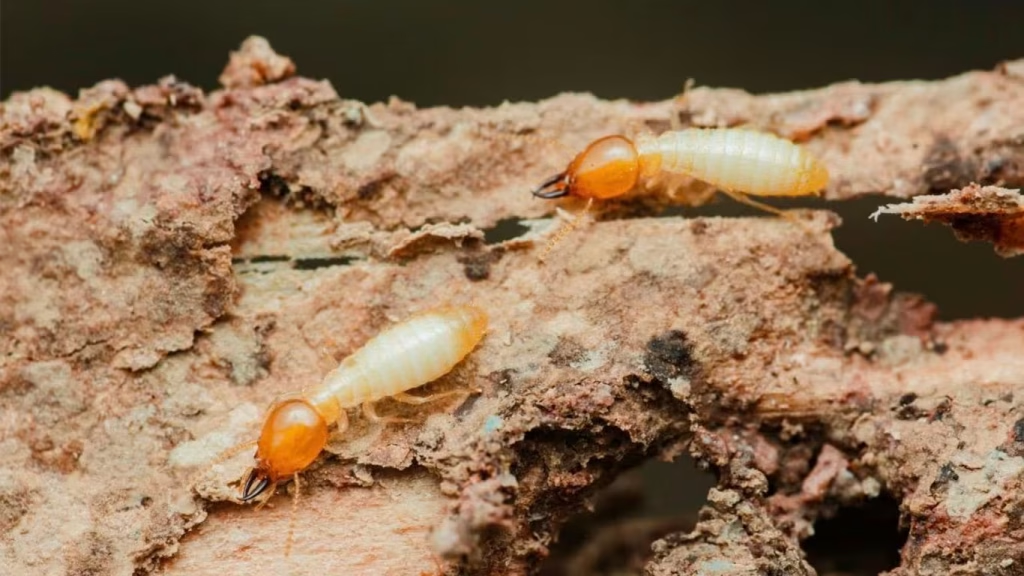
Termites are often called «silent destroyers» for a reason: they can chew through wood, flooring, and even wallpaper undetected for years. By the time the damage becomes visible, the structural integrity of your home may already be compromised.
At Avay Pest Control, we believe that understanding the enemy is the first step in protecting your investment. Here is the technical breakdown of how termites operate and the red flags you cannot afford to ignore.
The Math of Destruction
As we often highlight, a single termite queen can lay up to 30,000 eggs in a single day. This exponential growth means that a small localized problem can escalate into a full-blown structural crisis within months. Because termites work 24/7 without sleep, their cumulative impact is relentless.
1. Mud Tubes: The Termite Highway
Subterranean termites require moisture to survive. To travel between their underground colony and the wood in your home, they build pencil-sized «mud tubes» made of soil and debris.
Where to look: Check your home’s foundation, crawl spaces, and attic joists. If you break a tube and see small, white insects scurrying inside, you have an active infestation.
2. «Quiet» Hollow-Sounding Wood
Termites eat wood from the inside out, leaving only a thin veneer of timber or paint.
The Test: Tap on your walls, baseboards, or wooden beams. If they produce a hollow, papery sound, it is likely that the internal structure has been consumed. In advanced cases, wood may feel soft or «spongy» to the touch.
3. Discarded Wings and «Swarmers»
During the spring, reproductive termites (swarmers) leave the nest to start new colonies.
The Red Flag: Finding piles of small, uniform wings on windowsills or near entry points is a definitive sign that a colony is either inside or very near your home. Since swarmers are attracted to light, you will often find these near lamps or windows.
4. Frass: The Subtle Evidence
Drywood termites leave behind «frass»—essentially termite droppings that look like small piles of sawdust or coffee grounds. Unlike wood-boring beetles, termite frass is granular and often found near small «kick-out» holes in the wood.
5. Tight-Fitting Doors and Windows
As termites tunnel through door and window frames, they introduce moisture that causes the wood to swell. If you notice doors that suddenly become difficult to open or windows that stick, don’t just blame the humidity—it could be a structural warning sign.
The Avay Pest Control Strategy: Prevention Over Repair
Repairing termite damage can cost tens of thousands of dollars, whereas professional prevention is a fraction of that cost. Our 99% success rate is built on:
Thermal Imaging Inspections: Identifying heat signatures of colonies hidden behind drywall.
Strategic Soil Barriers: Creating a chemical perimeter that intercepts termites before they reach your foundation.
Continuous Monitoring: Ensuring that once we clear your home, it stays that way.
Expert Tip: Termites never take a day off. Neither do we. If you suspect any of these signs, an immediate professional inspection is the only way to stop the clock on structural damage.


